
The shelf is turning
Loading…
The shelf is turning
Loading…
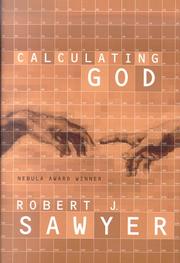
Robert J. Sawyer · Fiction · 2000
A humming, silver shuttle slipped between the glass of the Royal Ontario Museum and the cold night air, its hull catching the streetlights like a moth caught in a storm
The doors opened with a sigh, and a creature stepped onto the pavement—six legs, two arms, a torso that seemed carved from polished basalt
Its eyes, dark and unblinking, scanned the cityscape before it turned, and in perfect English said,
“Take me to a paleontologist.”
The words hung over the cobblestones, absurd and precise A security guard stared, then called for backup
Within minutes a cluster of journalists, police, and a bewildered crowd gathered, their flashbulbs flickering like fireflies caught in a draft
The alien raised a hand, palm up, and waited.
The museum’s director ushered Dr. Thomas Jericho, a paleontologist whose reputation for stubborn atheism was matched only by his love of fossils. Jericho, still in his rain‑slicked coat, followed the creature through the museum’s marble halls, past the dinosaur skeletons that loomed like ancient gods.
The alien introduced itself as Grandfather, a member of a species called the Yomi, who had traveled across light‑years on a vessel that resembled a cathedral of glass. Grandfather’s voice was calm, each syllable measured, as if reciting a theorem.
“Your planet has suffered five great catastrophes,” Grandfather said, gesturing to a timeline etched onto the museum wall
“Each coincided with the same events on our world, and on the world of the K’thri, who traveled with us
We see a pattern that we call the hand of God.”
Jericho stared at the timeline: a meteor that killed the dinosaurs, a global flood, a massive volcanic winter, a sudden ice age, and a plague that swept continents
The same markers appeared on the alien’s stone tablets, rendered in symbols that pulsed with an inner light.
“Coincidence,” Jericho replied, his mind already racing through statistical models. “Randomness can produce patterns that seem purposeful.”
Grandfather tilted its head. “We have calculated the probability. It is less than one in a trillion.”
Jericho’s skepticism hardened. He invited Grandfather into his office, where the walls were plastered with images of ancient seas and the bones of creatures long extinct. He poured tea, the alien watching the steam rise, as if measuring the curvature of Earth’s atmosphere.
Grandfather spoke of the first cataclysm, the impact that had shattered the Yomi’s moon, sending a cascade of debris that sterilized half the planet
He described the K’thri’s own extinction event, a runaway greenhouse effect that turned their world into a furnace
He showed holographic maps of star systems, each blinking where a supernova had exploded, each explosion a beacon of death that had swept across their three worlds.
Jericho listened, his scientific mind cataloguing each event, comparing isotopic signatures, crater ages, extinction curves
He thought of the fossils on his desk—tiny trilobites trapped in amber, the feathered dinosaurs that hinted at a world beyond the known
He thought of the gaps in the record, the moments where life seemed to pause, then surge anew.
“Do you believe this is proof of a deity?” Jericho asked, his voice low, the question a weight he had carried since childhood.
Grandfather’s eyes dimmed. “We do not know the nature of this God. We only know that something—something beyond the reach of our calculations—has intervened at precise intervals. We call it God because it is the simplest explanation for the pattern.”
Jericho felt a chill, not from the night air but from the implication that the universe might be a ledger, each entry a divine debit. He thought of his own father, a minister who had died before he could answer the question of God’s existence.
Weeks later, a supernova erupted in a neighboring star cluster, its light racing toward the three worlds like an inevitable tide. Grandfather gathered his people in the museum’s atrium, the alien’s six legs moving in unison, the crowd watching in awe.
“The sixth cataclysm approaches,” Grandfather announced. “Our calculations show that the radiation will reach our planets within a decade. It will strip atmospheres, sterilize surfaces, end all life unless… unless there is a force that will intervene.”
Jericho felt his pulse quicken He had spent his life measuring the past; now the future was a naked variable
He spent nights in the lab, running simulations, adjusting for unknown variables, trying to find a loophole in the supernova’s path
He consulted astrophysicists, priests, philosophers—anyone who could offer a different lens.
One night, Grandfather returned to Jericho’s office, its eyes reflecting the city’s skyline.
“You have asked many questions,” Grandfather said. “You have asked whether God exists, whether God intervenes. You have also asked why we would believe a pattern is proof of anything at all.”
Jericho swallowed. “Because otherwise we are alone, adrift in a universe that cares nothing for us.”
Grandfather placed a hand—six fingers—on the desk. “We have seen other civilizations that chose to worship the pattern, others that rejected it and perished. We have learned that belief shapes survival.”
Jericho stared at the hand, feeling the weight of a thousand worlds pressing on his shoulders.
The supernova’s light reached the museum’s dome, a brilliant scar across the night Scientists worldwide measured its intensity, confirming Grandfather’s timeline
In the days that followed, the Yomi and the K’thri began to construct massive shields—structures of unknown material that floated above their continents, humming with a low resonance.
Jericho watched the construction via a live feed, his heart a metronome of dread and fascination
He saw the alien engineers, their six limbs moving in synchronized precision, the K’thri’s translucent towers rising like coral
He saw the Earth’s own governments scramble, the United Nations convening emergency sessions, the public panicking and praying in equal measure.
Grandfather appeared on a global broadcast, its voice amplified through speakers in every city.
“We have built a shield,” Grandfather announced “It will protect our worlds from the supernova’s blast But it is not a miracle
It is the result of many minds working together, of belief turned into action If you, Earth, choose to build your own shield, we will aid you
If you choose to wait for a deity to intervene, you will be left to the stars.”
Jericho felt the room tilt. He thought of the fossil record, of the countless species that had adapted, survived, perished. He thought of humanity’s capacity for both destruction and creation.
He stood before a crowd of reporters, his hands trembling. “We will build,” he said. “We will not wait for a god to save us. We will calculate, we will act, we will survive.”
In the months that followed, engineers, scientists, and volunteers erected a lattice of orbital mirrors and ground‑based reflectors, a planetary shield designed to deflect the supernova’s gamma rays
Grandfather’s people supplied exotic alloys, the K’thri contributed energy matrices that stored and released power in controlled bursts
Humanity contributed ingenuity, stubbornness, and a willingness to believe that its own hands could shape destiny.
When the supernova’s wave finally arrived, a silent, violet glow washed over the sky
The shield hummed, the alien alloys resonated, the Earth’s atmosphere flickered as the radiation brushed against the protective lattice
The wave passed, its lethal edge softened, the surface of the planet spared.
In the aftermath, Grandfather stood beside Jericho on the museum’s roof, looking out over a city that had survived by its own calculation.
“We have not proved God,” Grandfather said, its voice softer now, “but we have shown that the universe can be guided by something more than chance.”
Jericho turned to the alien, his eyes reflecting the distant stars. “Perhaps God is the sum of all our calculations, the hope we embed in each equation.”
Grandmother—Grandfather’s companion from the K’thri—joined them, her translucent form shimmering. Together they watched the sunrise, the light spilling over a world that had faced oblivion and chosen to act.
The museum’s dinosaur skeletons stood silent, their fossilized bones a reminder that even the greatest of cataclysms could be endured
The alien’s shuttle, now a permanent exhibit, glowed softly in the morning sun, a testament to the day humanity met the unknown and answered with its own hands.
In the quiet that followed, Jericho returned to his lab, the scent of old bones and fresh coffee mixing in the air. He opened a new notebook, its first line a simple equation:
Probability of survival = belief × action.
He smiled, knowing that the universe, vast and indifferent, had given him a glimpse of something that might be called God—not a deity who intervened from afar, but the collective will of beings who dared to calculate, to build, to believe.
A humming, silver shuttle slipped between the glass of the Royal Ontario Museum and the cold night air, its hull catching the streetlights like a moth caught in a storm
The doors opened with a sigh, and a creature stepped onto the pavement—six legs, two arms, a torso that seemed carved from polished basalt
Its eyes, dark and unblinking, scanned the cityscape before it turned, and in perfect English said,
“Take me to a paleontologist.”
The words hung over the cobblestones, absurd and precise A security guard stared, then called for backup